
Business
How to Give Constructive Feedbacks Without Undermining the Creative Direction
Jan 18, 2026
4 min read

Studio Tips
Why We Still Choose Natural Light of 80% for most of all Our Commercial Projects
Jan 15, 2026
4 min read
From first review of 600 frames down to 40 polished finals, this is exactly how we process a shoot, and the tools we use at every stage.
CATEGORY
Retouching
DATE
READ TIME
8 min read
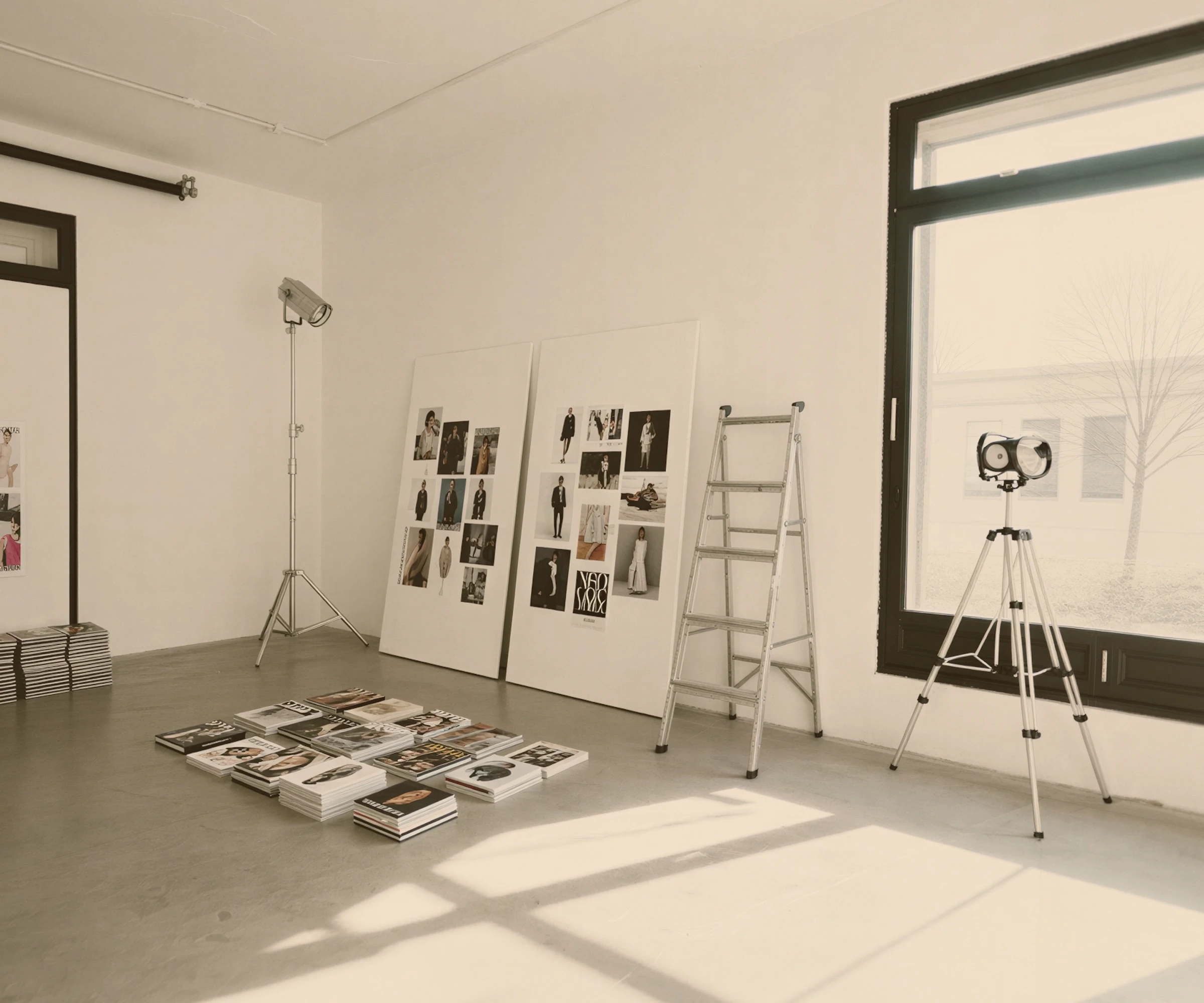
A standard half day shoot produces between four and six hundred raw frames. A standard delivery is thirty to fifty finished images. The journey from one number to the other, from the raw state of the shoot to the finished files a client receives, is a structured process with distinct stages, specific responsibilities, and defined client touchpoints. This is that process, described in full.
Understanding the workflow is useful for clients not as a technical education but as a practical one. Knowing what happens between shoot day and delivery, who is involved at each stage, and where client input is needed helps everyone move faster and with fewer misunderstandings.
Within twenty four hours of shoot day, all raw files are ingested from the camera media to our primary working drive and backed up simultaneously to a second drive on a separate system. We do not work from cards. Cards are kept as a third copy until the backup sequence is confirmed complete.
All files are renamed at ingestion according to our naming convention, project code, date, sequential frame number. A 600 frame shoot produces files named consistently from frame 001 through to frame 600, regardless of how the camera numbered them. This convention makes every subsequent stage, culling, editing, version management, and client communication, significantly cleaner.
The first pass through the raw files is technical, not creative. We identify and reject frames with technical failures, out of focus frames where focus was not achieved on the intended element, motion blur from subject or camera movement, severe exposure problems that are beyond recovery, and frames where the sensor caught something that makes the image unusable, a hard blink, an equipment intrusion, or a background element that cannot be removed.
Technical culling is typically fast. Most frames from a well run shoot pass the technical bar. In our experience, around ten to fifteen percent of frames are rejected at this stage, leaving approximately five hundred images for the creative selection.
"The edit, choosing which 40 frames from 600, is the first act of retouching. What you don't include is as important as what you do."
Creative culling is where five hundred frames become sixty to eighty candidates. This is the most consequential stage of the post-production process and the one that requires the deepest understanding of the brief. The criteria are: does this frame serve the project? Is this the best frame of this moment, or is there a better version within three frames of it? Does this image add something to the set that is not already covered?
We cull in pairs and small sequences. When several frames of the same moment exist, we compare them directly rather than evaluating them in isolation. The best frame may not be immediately obvious. Expression, posture, and compositional sharpness may peak in slightly different frames of the same moment, and the selection requires weighing these qualities against each other.
The creative cull is done by the photographer or a senior member of our post production team who was present on set. The presence element matters. Knowing which moments were important during the shoot, and why, informs which frames should be selected when the contact sheet is reviewed.
The sixty to eighty candidate frames are presented to the client as a low resolution gallery. The client selects their preferred thirty to fifty frames for retouching. We include recommendations, frames we consider strongest, marked clearly, but the final selection is the client’s.
This stage frequently produces a useful conversation. Clients sometimes select frames for reasons that reveal something about the project that was not explicit in the brief. They sometimes miss frames that we consider essential. The edit selection is an opportunity to confirm that photographer and client are aligned before significant retouching investment is made.
Retouching proceeds in a defined order. Base corrections first, exposure, white balance, and any lens corrections are applied and synchronized across the set so all images share a consistent starting point. Then cleanup, the removal of incidental distractions such as dust spots, stray hairs, and environmental elements that were not part of the intended composition. Then frequency separation skin work where applicable. Then color grading, the establishment of the final color and tonal character of the set.
Grading is applied globally first and then adjusted per image to account for variations in light between frames. The goal is a set that reads as cohesive, images that could sit next to each other in any order and feel like they belong to the same project. This cross image consistency is one of the most time intensive aspects of professional retouching and one of the most commercially important.
The retouched set is delivered as a web quality proof gallery. Clients review against the brief and submit feedback within a defined window, typically five working days. We use a simple annotation system. Clients mark individual frames with specific comments. Skin tone appears too warm on this frame is actionable. We address all technical feedback in the revision round.
Our standard rate includes two rounds of revisions. In practice, most projects require only one. When a third round is needed, it is usually because the original brief did not specify something that has since become important. In that case, it is a brief expansion, not a correction, and is treated accordingly.
Approved finals are exported in two formats, full resolution TIFF masters in Adobe RGB, uncompressed, and web ready JPEGs in sRGB with appropriate compression for the intended platform. Files are named according to our project convention and delivered via a shared transfer link with a defined expiry.
The delivery documentation includes a brief summary of the color space information, the recommended use cases for each file format, and the licensing terms applicable to the set. We retain backup copies of all masters for twelve months post delivery. After that period, archiving is the client’s responsibility.